
Keywords
devices
children
digital skills
digital citizenship
critical thinking
How to Cite
Abstract
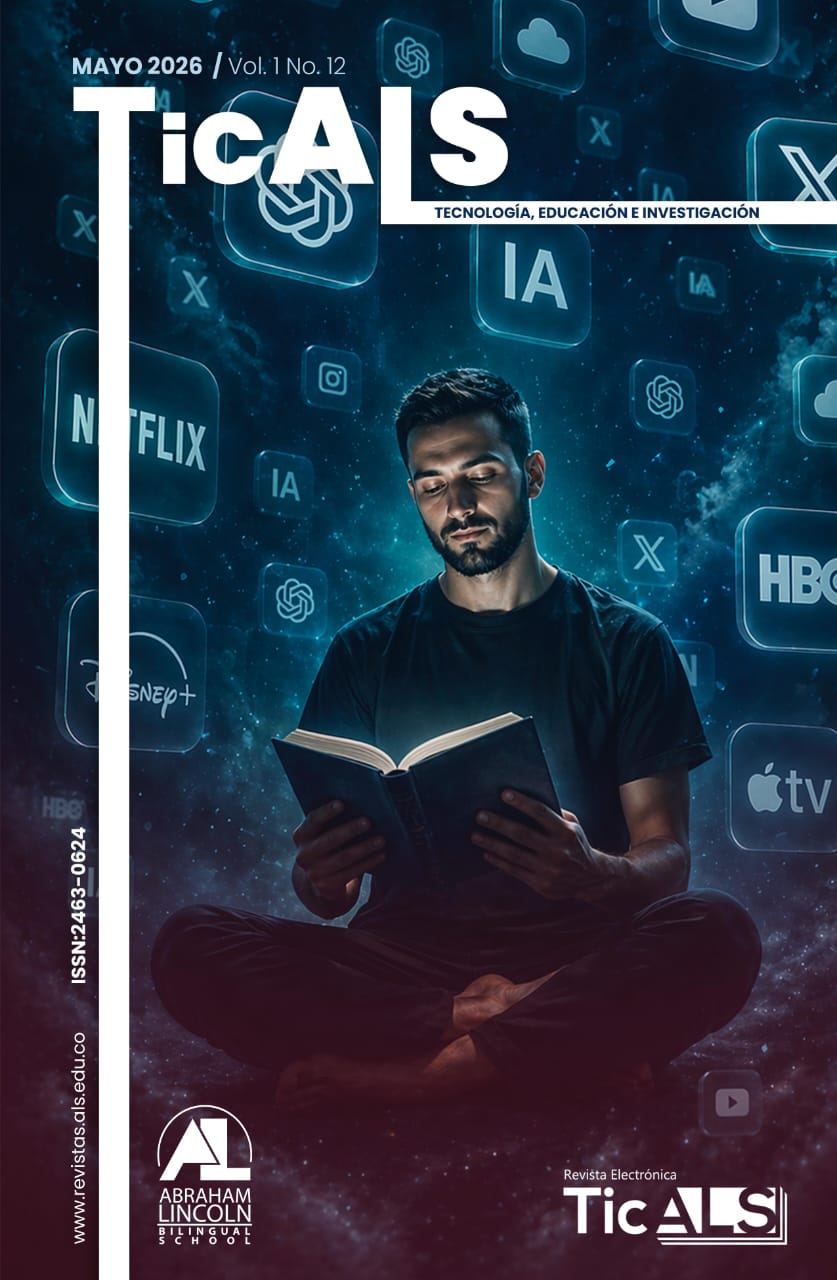
The integration of a digital world into the lives of elementary-aged children is a current reality that generates important concerns to consider and analyze. This unstoppable global expansion of technology and the questionable necessity of being connected 24/7 is demanding a paradigm shift in educational and parental approaches, moving from passive consumption or restrictive prohibition towards active, critical, and rights-based pedagogy. The main challenge is not the technology itself, but how we guide young learners as educators and caregivers to navigate with insight, safety, and purpose. This article reflexively explores a framework for promoting digital citizenship, based on a balanced approach between the development of 21st century skills and intentional adult modeling.
References
Cohen, G., Medina, E., Handysides, D., Shah, H., Arechiga, A., & Shih, W. (2024) The impact of social media usage on lifestyle behaviors and health. Lifestyle Medicine. 5(94). https://doi.org/10.1002/lim2.94
Convention on the Rights of the Child, Nov. 20, 1989, 1577 U.N.T.S. 3. https://www.ohchr.org/en/instruments-mechanisms/instruments/convention-rights-child
DeepSeek. (2025). DeepSeek [Large language model]. https://www.deepseek.com/
Gallego Arrufat, M. J., García Martínez, I., Romero López, M.A, & Torres Hernández, N. (2024). Digital rights and responsibility in education: A scoping review. Education Policy Analysis Archives, 32(3). https://doi.org/10.14507/epaa.32.7899
Gutiérrez Aguilar, O., Turpo Gebera, O., Chicaña Huanca, S., Laura de la Cruz, K.M., Pérez-Postigo, G., Diaz-Zavala, R. & Osorio Ccoya, I. (2024). Digital skills and digital citizenship education: An analysis based on structural equation modeling. Journal of Technology and Science Education, 14(3), 738-755. https://doi.org/10.3926/jotse.2436.
Maria, I., & Puteh, M.O. (2025). Screen Time vs. Active Play: How Digital Exposure Impacts the Acquisition of Fundamental Motor Skills in Early Childhood. Al-Athfal: Jurnal Pendidikan Anak, 11 (1), 153-170.
Martínez Martínez, A. M., Roith, C., Aguilar Parra, J. M., Manzano León, A., Rodríguez Ferrer, J. M., & López Liria, R. (2022). Relationship between Emotional Intelligence, Victimization, and Academic Achievement in High School Students. Social Sciences, 11(6), 247. https://doi.org/10.3390/socsci11060247
Rahimah. (2021). Children's Social Emotional Relationship to Digital Parenting. IJRS: Internasional Journal Reglement Society 2, 2, 119-124.
Salas Pilco, S.Z., Xiao, K., & Oshima, J. (2022). Artificial Intelligence and New Technologies in Inclusive Education for Minority Students: A Systematic Review. Sustainability, 14(20), 13572. https://doi.org/10.3390/su142013572
Sîngeorzan, E., & Roman, A.F. (2025). Fostering digital wellbeing and balanced screen use in primary school pupils. Journal Plus Education. Vol. XXXIX (2), 556-564.
Surmelioglu, Y., & Seferoglu, S. S. (2019). An Examination of Digital Footprint Awareness and Digital Experiences of Higher Education Students. World Journal on Educational Technology: Current Issues, 11(1), 48-64.
UNICEF Innocenti. (2025) Childhood in a Digital World: Screen time, skills and mental health. Global office of Research and Foresight. https://www.unicef.org/innocenti/media/11296/file/UNICEF-Innocenti-Childhood-in-a-Digital%20World-report-2025.pdf
Yelland, N. (2007) Shift to the Future Rethinking Learning with New Technologies in Education. Routledge Taylor & Francis Group.